LifeLock Reviews (2026): Still Worth It? We Tested It
Is LifeLock Worth It? Our Honest Review
Is LifeLock legit? Yes. Is LifeLock worth it? For most people, no. LifeLock is a real, established service backed by Gen Digital (Norton) — that is not in question. The problem is what you actually get for your money. After 60+ days of testing with real identities, LifeLock’s Core plan only includes two-bureau credit monitoring, no financial account alerts, no home title monitoring, and no 401(k) protection. Our dark web scan returned 8 hits on LifeLock where Aura found 18 on the same identity. Alert speed was hours behind. LifeLock is not a bad service — but at comparable price points, Aura covers more on every plan.
60-day money-back · Cancel anytime
You Should Get LifeLock If:
Rating: 3.9/5
- ✅ You specifically want the LifeLock brand and its long track record — established 2005
- ✅ You want the Total plan’s $3 million in financial coverage
- ✅ You are already using Norton’s security products and want one vendor, one bill
- ✅ Norton’s industry-leading antivirus matters to you as part of the bundle
Honest Reasons to Look Elsewhere:
- ❌ Core only monitors 2 of 3 credit bureaus — you need Advanced for the third
- ❌ Financial account and credit card monitoring not included on Core
- ❌ Home title monitoring only on Total
- ❌ 401(k) and investment alerts only on Total
- ❌ Dark web scan missed 10 exposures that Aura caught
- ❌ Alert speed was hours behind in every test
Still set on LifeLock? Claim 52% OFF here →
What Does Each LifeLock Plan Actually Include?
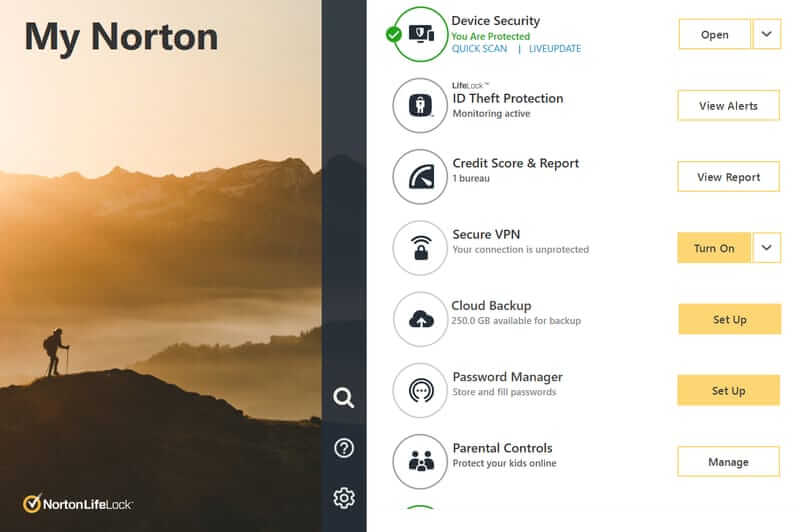
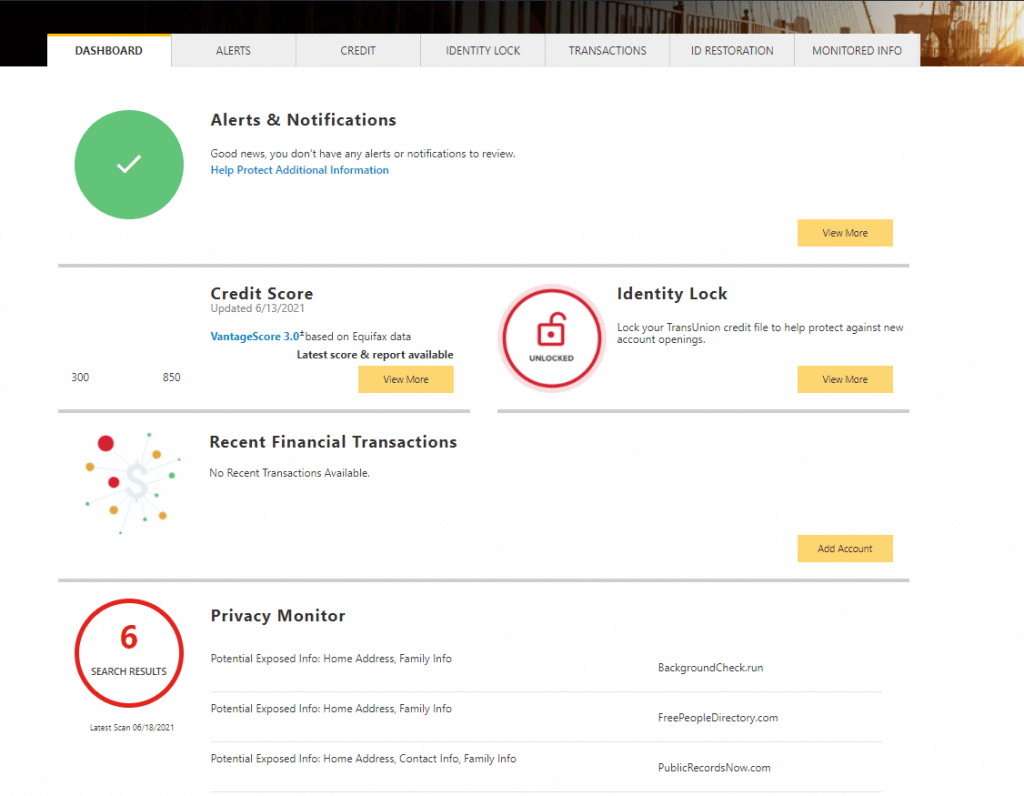
LifeLock’s Core plan — where most new subscribers start — only monitors two of three credit bureaus and does not include financial account monitoring, home title monitoring, or 401(k) alerts. You need the Advanced or Total tier for those features, and most people have no idea what they are missing until something goes wrong.
Here is what our testing found about the tier structure:
- Core (where most new subscribers start): Two-bureau credit monitoring only. No financial account monitoring. No home title monitoring. No 401(k) alerts.
- Advanced: Adds three-bureau credit monitoring and financial account alerts.
- Total: Adds home title monitoring, 401(k) and investment alerts, and full coverage.
When someone says “I have LifeLock,” the level of coverage they have depends entirely on the tier they chose — which most people chose based on price, not based on what is actually included.
This is not just about tiers existing. My issue is how much coverage varies between them. If someone is paying for Core thinking they have sufficient credit monitoring, they do not. They have two-thirds of it.
Why This Matters Practically
Credit monitoring only catches certain types of fraud[1] — specifically ones that require a new line of credit in your name. If someone gains access to a bank account or credit card that already exists and starts making purchases, credit monitoring is not going to catch that. You need financial account monitoring for that, which is not included on Core.
How Good Is LifeLock’s Dark Web Monitoring?
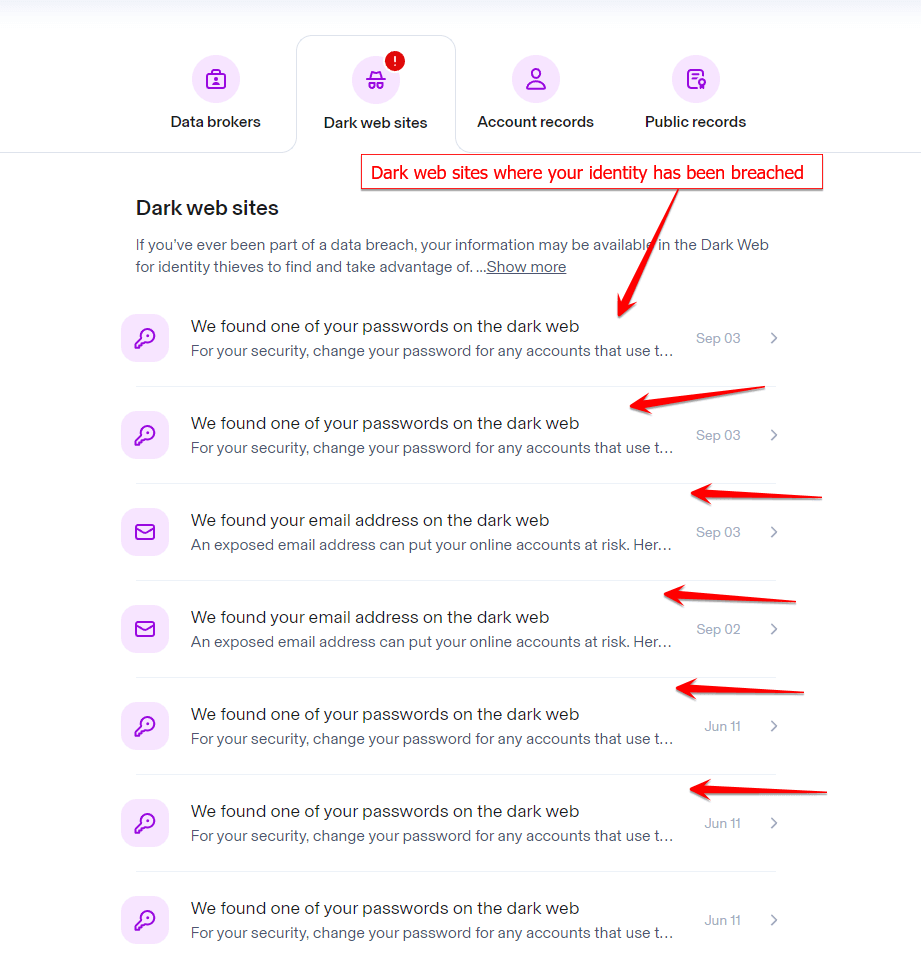
LifeLock’s dark web scan returned 8 breach hits in our testing — while Aura found 18 on the same identity, including old Gmail credentials LifeLock missed entirely. That is a gap of 10 exposures that never showed up on LifeLock’s scans.
We ran both services on the same team member’s information simultaneously. LifeLock’s initial scan found 8 breach hits — which is not nothing, and it is certainly worth knowing about. But Aura returned more than double that count.
There are possible reasons why the gap exists — different databases, different scraping methodology, different timing. We cannot tell you exactly why. We only know it was consistent across multiple scans and tests. In the identity theft world, what you do not know is exactly the problem.
LifeLock’s initial dark web scan from a fresh signup took about 24 hours to complete. That is not out of the norm for this category, but it is something worth knowing going in. You are not going to have a full picture of your exposure on the day you sign up.
Check Your Dark Web Exposure with Aura →
How Fast Are LifeLock’s Alerts?
In our testing, LifeLock’s alerts arrived hours after events occurred — including credit checks and bank credential changes. Aura sent alerts before the technician had left the house; LifeLock’s came hours later.
Here is the full story. A team member was getting internet installed at her house, which required a credit check by the technician. She was testing multiple identity theft protection platforms concurrently. She received an alert about that credit check from Aura before the tech had even left her house. LifeLock’s alert came through hours after the fact.
We also tested bank credential changes — imagine someone gaining access to your bank account and changing the password. LifeLock’s alert came hours after the information had already been changed. That is not real-time monitoring. That is getting a confirmation that something has already happened.
Identity thieves move fast once they have your information.[2] The value of an alert is almost entirely in its timing. An alert that arrives hours later is notifying you about a fire that may have already spread.
Customer Support: The Midnight Test
We call every service we test during off-hours, on weekends, and late at night — because if something goes wrong, you may need to call during those times.
When we called LifeLock support:
- One call took about 5 minutes to reach a real person — not great, not terrible
- Another call, the line disconnected before we reached anyone
- A third call included an upsell attempt during what should have been a support situation
If you are calling because something is potentially going wrong, a sales pitch is not what you want.
When we called Aura support at midnight on a Friday, a real person picked up in under a minute. They answered every question we had and called us back a week later to make sure the issue was resolved.
| Feature | LifeLock | Aura |
|---|---|---|
| Answer speed | ~5 minutes (varied) | Under 1 minute |
| Disconnected calls | Yes, once during testing | No |
| Upsell during support | Yes, once during testing | No |
| Proactive follow-up | No | Called back a week later |
Is LifeLock Legit? What LifeLock Does Right
LifeLock has been around for a long time, and millions of people use and trust it.[3] A product does not stick around that long without doing some things right.
- Credit monitoring on Advanced and Total tiers is solid — comprehensive and reliable
- Norton’s antivirus is genuinely industry-leading — this is LifeLock’s strongest differentiator
- Norton integration means antivirus, VPN, and identity protection in one bundle (LifeLock is part of Gen Digital, the same company as Norton)
- Change of address monitoring catches USPS mail forwarding fraud — a feature that deserves more attention
- $3M maximum insurance on Total is one of the highest in the category
- Brand accountability — Norton’s longevity and recognition carry a reasonable level of accountability
If you are on LifeLock’s Total tier and have been for years, you are not unprotected. The question is whether it is the most complete option at the price you are currently paying.
LifeLock vs Aura: Head-to-Head
| Feature | LifeLock | Aura |
|---|---|---|
| 3-Bureau Credit Monitoring | Advanced+ only | ✅ All plans |
| Financial Account Monitoring | Advanced+ only | ✅ All plans |
| Dark Web Alerts (Testing) | 8 found | 18 found |
| Alert Speed | Hours after the fact | Before the tech left the house |
| Data Broker Removal | 19 sites (manual unless upgraded) | 200+ sites, automatic on all plans |
| Identity Theft Insurance | Up to $3M (Total only) | Up to $1M per adult (all plans) |
| Antivirus | ✅ Norton — industry-leading | ✅ Included, less established |
| VPN | ✅ Norton VPN | ✅ Included |
| Customer Support | 5 min wait, upsell risk | Under 1 min, proactive follow-up |
| Individual Price | $7.50/mo (Core) — $20/mo (Total) | $12/mo (all features) |
| Family Plan | $18.50/mo — $39/mo | $25/mo (5 adults + unlimited kids) |
Aura’s individual plan starts at $12/month — comparable to LifeLock’s Core — except Aura includes everything LifeLock locks behind its most expensive tier.
SAVE 68% on Aura — All Features, Every Plan


FAQ
Is LifeLock worth it in 2026?
LifeLock is worth it only on the Total tier ($20/month), which includes three-bureau credit monitoring, home title monitoring, 401(k) alerts, and $3M insurance. The Core plan ($7.50/month) — where most subscribers start — only monitors two credit bureaus and excludes financial account monitoring entirely. For the same price as Core, Aura includes every feature on every plan.
Is LifeLock legit?
Yes, LifeLock is a legitimate identity theft protection service owned by Gen Digital (formerly NortonLifeLock), operating since 2005 with millions of subscribers. The service is real and the insurance is backed by a major corporation. The question is not whether LifeLock is legit — it is whether the tier you are paying for provides sufficient coverage. Core leaves significant gaps. Total delivers genuine protection.
How much does LifeLock cost?
LifeLock individual plans cost $7.50/month (Core), approximately $14/month (Advanced), and $20/month (Total). Family plans range from $18.50/month to $39/month. Core and Advanced lock out essential features like home title monitoring and 401(k) alerts — only Total includes everything. Aura offers comparable full coverage starting at ~$9/month.
Does LifeLock monitor all three credit bureaus?
Only on Advanced and Total tiers. LifeLock Core monitors two bureaus. Since lenders report to different bureaus for different products, monitoring fewer than three creates blind spots where fraud can happen without triggering an alert.
How does LifeLock’s dark web monitoring compare to Aura?
In our testing, LifeLock’s dark web scan returned 8 breach hits while Aura found 18 on the same identity — including old Gmail credentials LifeLock missed entirely. The gap of 10 undetected exposures was consistent across multiple scans. Different databases and scraping methodology likely explain part of the difference, but the result is clear.
How fast are LifeLock’s alerts?
In our testing, LifeLock’s alerts arrived hours after events occurred. During a credit check test, Aura sent a notification before the technician left the house — LifeLock’s alert came hours later. For bank credential changes, LifeLock’s notification arrived hours after the password had already been changed.
Should I choose LifeLock or Aura?
If you want Norton’s industry-leading antivirus bundled with identity protection from one provider, LifeLock Total is worth considering. If you want the best pure identity theft protection — three-bureau monitoring on every plan, faster alerts, stronger dark web scanning, and data broker removal — Aura is the better choice at a lower price. I personally use and pay for Aura after testing — that is not a line in a script, that is just a thing that is happening.
Final Verdict: Is LifeLock Worth It in 2026?
LifeLock is a legitimate service with genuine strengths — Norton’s antivirus, change of address monitoring, $3M insurance on Total, and the accountability that comes with being one of the most recognized names in the space. The tiered structure that locks essential features behind the most expensive plan is the core problem. Those are not premium features — they are the baseline for what this service should deliver to every subscriber.
If you want the best identity theft protection specifically, Aura is what I use and what I recommend. If you want a security bundle from an established name, LifeLock’s Total tier is a solid choice.
Still set on LifeLock? Claim 52% OFF here →
Related: Cloaked vs LifeLock vs Aura — prevention vs protection | Aura vs LifeLock — Full Comparison | Aura Review | Identity Guard vs LifeLock | Best Identity Theft Protection for Seniors | Best Credit Monitoring Service