Aura vs Identity Guard 2026 - We Have One Clear Winner
TL;DR
Aura is better than Identity Guard — and they use the same monitoring engine. Aura acquired Identity Guard’s parent company in 2019, so both services run on identical dark web monitoring technology. In our head-to-head testing, they returned the exact same alert count on the same test account. The difference is what each builds on top: Aura includes data broker removal from 200+ sites, 24/7 support (Identity Guard closes nights and Sundays), $1M insurance per adult vs $1M total, and a full security suite (VPN, antivirus, parental controls) — all on every plan starting at ~$9/month. Identity Guard’s only advantages are a lower entry price ($5/month Value plan) and a cleaner dashboard.
60-day money-back · Cancel anytime
Aura vs Identity Guard Features Comparison
| Feature |  ★★★★★ 5.0 |
 ★★★★½ 4.5 |
|---|---|---|
| Dark Web Alert Count (Testing) | ✅ Identical results | ✅ Identical results |
| Three-Bureau Credit Monitoring | ✅ All plans | ⚠️ Ultra only |
| Data Broker Removal | ✅ 30+ sites, automatic | ❌ Not offered |
| White-Glove Fraud Resolution | ✅ All plans | ⚠️ Ultra only |
| 24/7 Support | ✅ Confirmed midnight call | ❌ Business hours only |
| Family Insurance | ✅ $1M/adult (up to $5M) | ⚠️ $1M total |
| VPN + Antivirus | ✅ Included | ❌ Not offered |
| Dashboard UX | ⚠️ Still evolving | ✅ Cleaner currently |
| Parent Company | Same | Same |
| Promo Code | Save up to 68% on Aura | Read IDG Review |
Every service tested with real personal data by the Security Hero research team. No AI-generated reviews. Read our methodology →
Identity Monitoring & Alerts
Aura and Identity Guard are owned by the same parent company — and that is not a footnote. It is the most important fact in this comparison. Aura acquired Intersections Inc., Identity Guard’s parent, in 2019. The acquisition is documented in corporate filings and was covered in security industry press at the time.
The reason this matters: when we ran both services on the same test email address simultaneously, they returned an identical number of dark web alerts. Not approximately similar — exactly the same, because they run on the same underlying monitoring engine. They also appear to operate out of the same call center, with threat resolution specialists at both companies that are equally competent and trained.
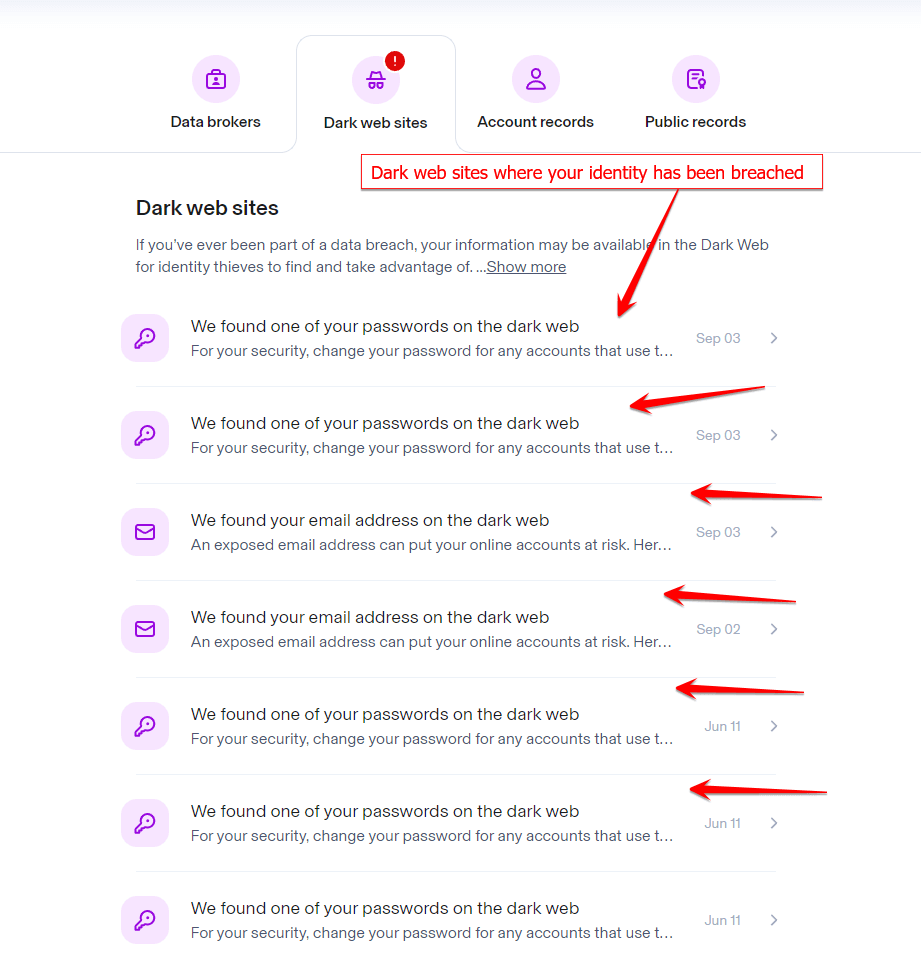
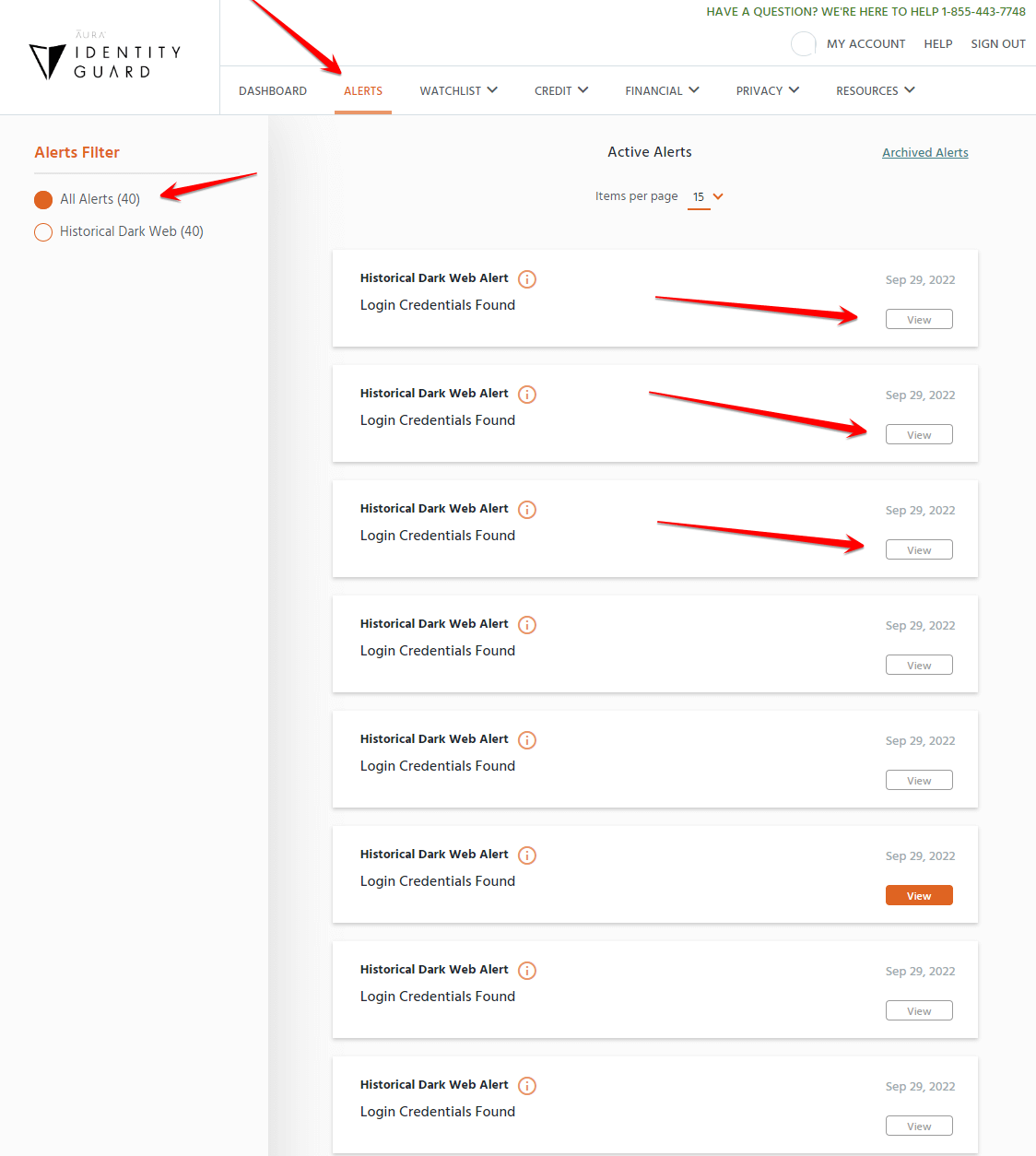
So the question is not which service has better monitoring technology. They have the same monitoring technology. The question is what each company has built on top of it. And there, the gap is real and widening. Aura is being actively developed and refined. Identity Guard is being maintained. Six months from now, that gap will be larger than it is today.
Verdict: Aura and Identity Guard are tied — they run on the same engine and returned identical dark web alert counts in head-to-head testing.
Fraud Resolution Services
It was a Saturday night, approximately midnight. I called Aura’s support line. The wait was under two minutes. The specialist who answered did not read from a script — I could tell because when I asked a follow-up question that deviated from the standard flow, they answered it directly rather than redirecting to a prepared answer.
I then attempted to reach Identity Guard with the same question. Identity Guard’s support hours are Monday through Friday 8 AM to 11 PM ET, Saturday 9 AM to 6 PM ET, with no Sunday coverage. At midnight on Saturday, Identity Guard’s line was closed.
That is the support gap in concrete terms. Not a comparison of response time scores. The gap between a service that picks up at midnight and one that does not.
Verdict: Aura wins — 24/7 access on every plan versus Identity Guard’s business-hours-only support and threat resolution locked behind their most expensive tier.
Data Broker Removal
This is the feature gap that shows up most visibly in day-to-day use — and it is entirely absent from Identity Guard at every pricing tier.
Aura automatically submits removal requests to 30+ data broker sites. When we checked the removal dashboard during testing, multiple sites had our test account’s information listed. Aura submitted opt-out requests to all of them without us taking any action beyond signing up.
Here is what Identity Guard’s data broker removal looks like: There is no data broker removal in Identity Guard. At any tier. The feature does not exist in the product.
Verdict: Aura wins by default — it actively removes your data from 30+ broker sites; Identity Guard has no equivalent feature at any plan level.
User Experience and Support: Identity Guard’s One Real Advantage
This is where Identity Guard’s current UX advantage over Aura is most visible.
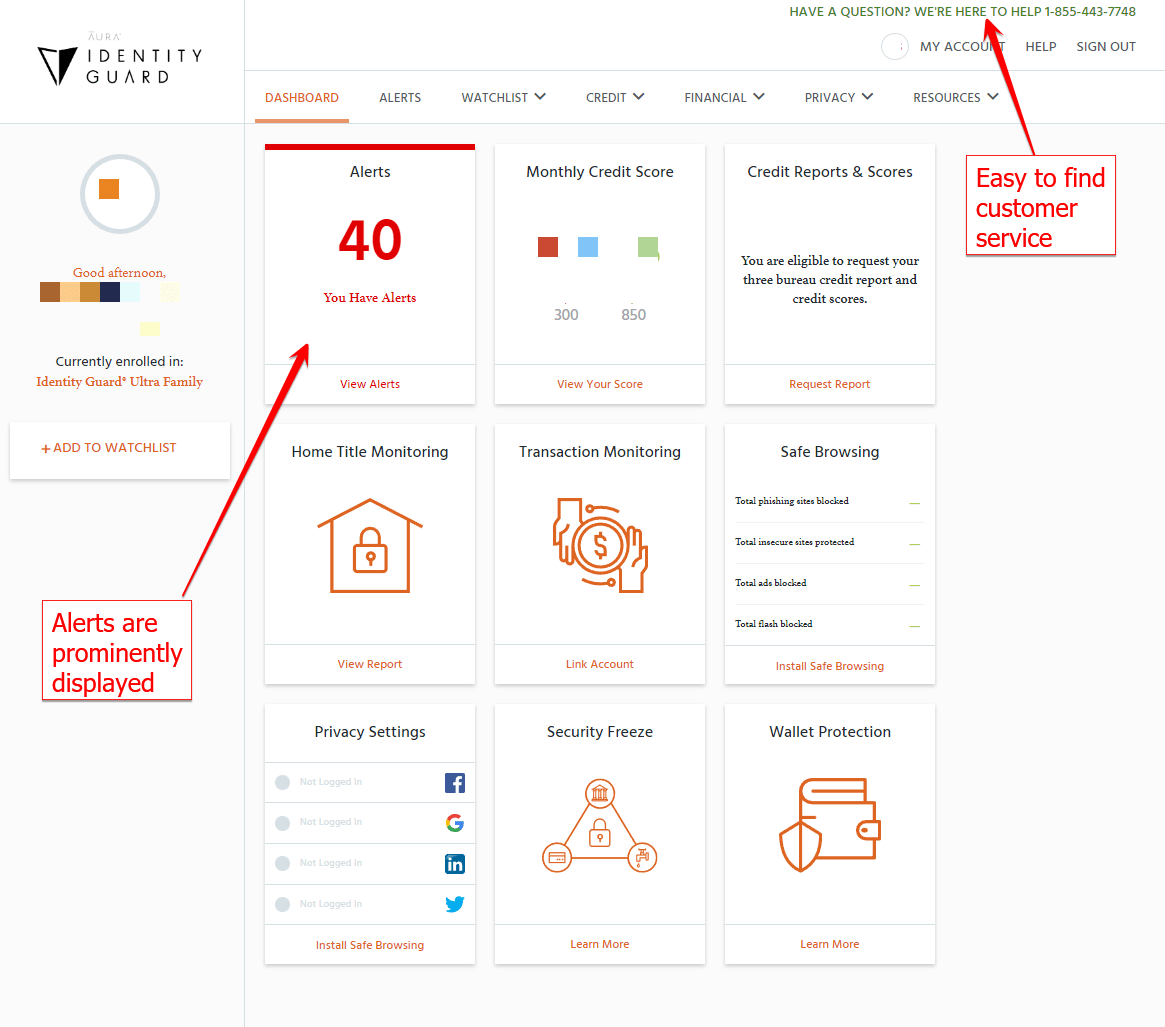
Identity Guard’s dashboard was considered the gold standard for this category when it was built. Clean layout, relevant information front and center, quick access to historical alerts.
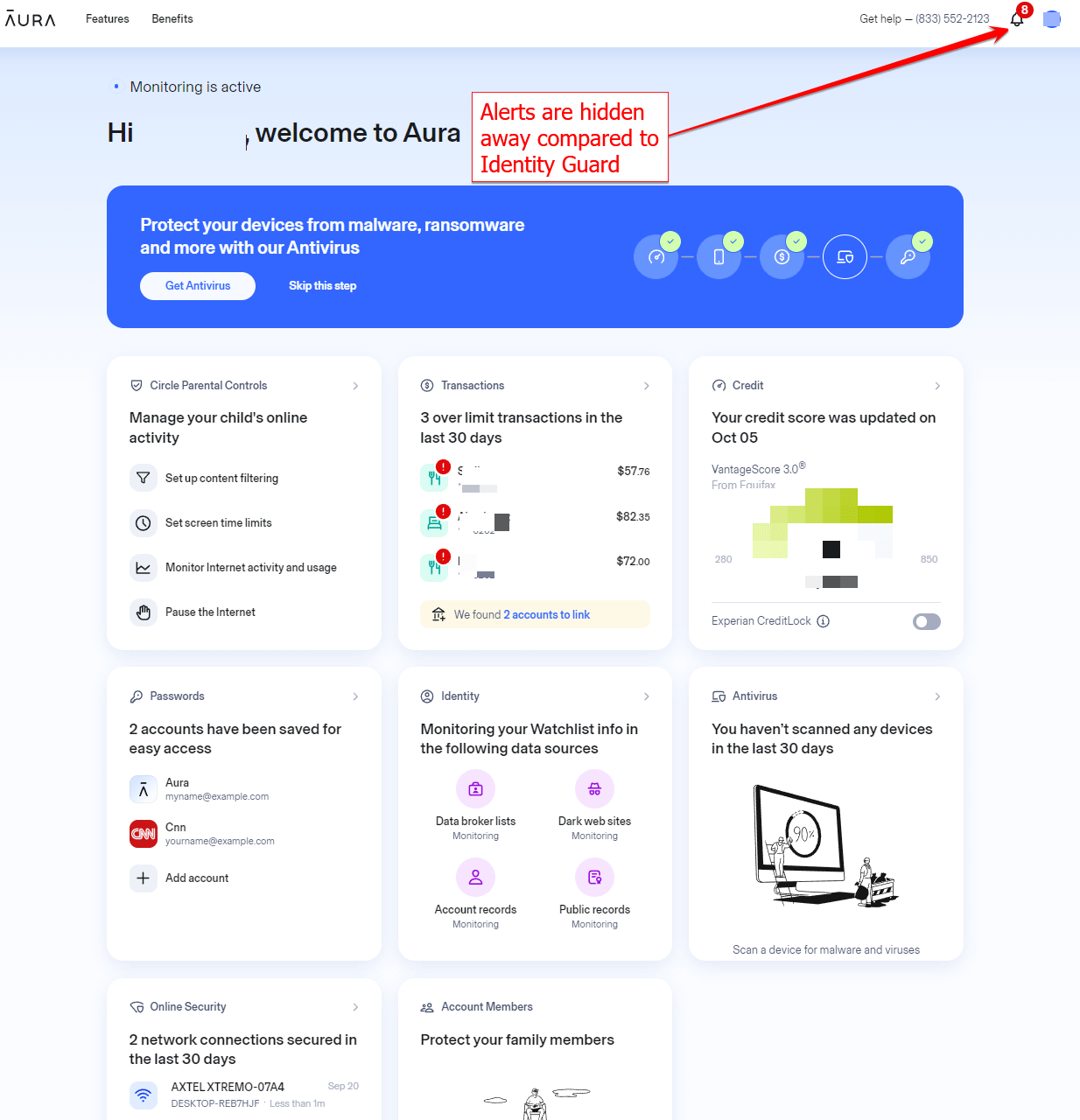
Aura’s current interface prioritizes visual design over functional density — it looks clean but requires more navigation for tasks that Identity Guard handles in fewer clicks.
Aura is actively redesigning its interface. Identity Guard is not, at the same pace. The dashboard gap will narrow. As of this testing period, if you are someone who regularly reviews historical alerts, Identity Guard’s UX is faster for that specific workflow.
Verdict: Identity Guard wins on dashboard design and family plan flexibility — it covers five adults plus unlimited children, while Aura’s family plan caps at five members total.
Additional Services (VPN, antivirus, etc.)
| Feature | Aura | Identity Guard |
|---|---|---|
| VPN | ✅ Included | ❌ |
| Antivirus | ✅ Included | ❌ |
| Parental Controls | ✅ Included | ❌ |
| Password Manager | ✅ Included | ⚠️ Basic |
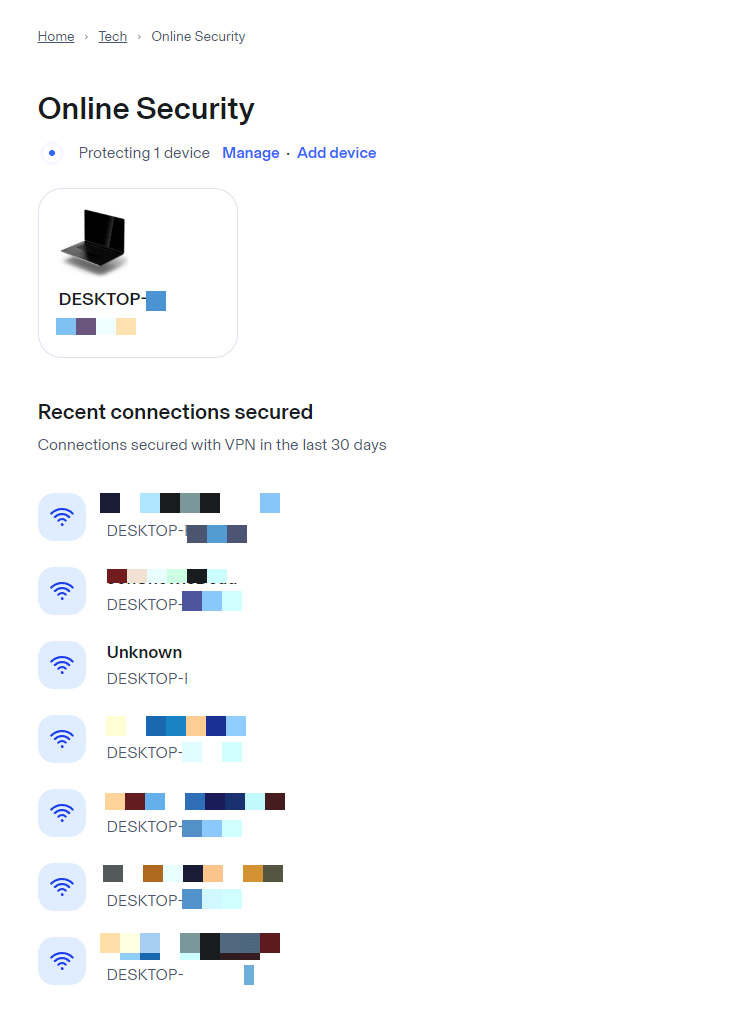
Verdict: Aura wins decisively — every plan includes VPN, antivirus, password manager, secure storage vault, and spam call protection; Identity Guard offers none of these.
Pricing Comparison
Individual Plan Cost
$9/month
Couple Plan Cost
$17/month
Covers 2 Adults
Family Plan Cost
$25/month
Covers 5 adults & unlimited kids
Individual Plan Cost
$5/m Value Plan
$11.99/m Total Plan
$17.99/m Ultra Plan
Couple Plan Cost
No Couples plan
Family Plan Cost
$8.99/m Value Plan
$17.99/m Total Plan
$23.99/m Ultra Plan
Covers 5 adults & unlimited kids
For households needing to cover more than five adults, Identity Guard’s Ultra family plan covers five adults plus unlimited children at $23.99/month. Aura’s family plan caps at five members total.
For very large or multi-generational households, this may be the specific reason to choose Identity Guard. For everyone else, the feature comparison above applies.
To get white-glove fraud resolution, full monitoring suite, and three-bureau credit monitoring on Identity Guard: Ultra plan at $17.99/month individual. To get all of that on Aura: $9/month individual. Every plan.
Aura also offers discounts up to 68% off plus a 60-day money-back guarantee.
FAQ
Is Aura better than Identity Guard?
Yes, Aura is definitively better. Identity Guard is an Aura product — Aura acquired Identity Guard’s parent company in 2019. Both use the same monitoring engine (confirmed in our testing), but Aura adds VPN, antivirus, data broker removal, $5M theft insurance (vs $1M), and 24/7 support at similar pricing.
Are Aura and Identity Guard the same company?
Yes. Aura acquired Intersections Inc. — Identity Guard’s parent — in 2019. Both services run on the same dark web monitoring engine, which is why they returned identical alert counts on the same test account in our testing.
Which is cheaper – Aura or Identity Guard?
Identity Guard starts at $5/month (Value plan), while Aura starts at ~$9/month. But Aura includes VPN, antivirus, data broker removal, and 24/7 support on every plan. To get comparable coverage on Identity Guard, you need the Ultra plan at $17.99/month — nearly double Aura’s price.
Does Identity Guard have data broker removal?
No. Not at any tier. Aura’s removal dashboard showed opt-out requests submitted to 30+ sites. Identity Guard has no equivalent feature.
Which has better identity theft insurance?
Aura offers superior coverage: up to $5M on family plans ($1M per adult) vs Identity Guard’s $1M maximum total coverage.
Does Aura have 24/7 customer support?
Yes. We called Aura at midnight on a Saturday and connected in under two minutes to a knowledgeable specialist. Identity Guard’s support line was closed at that hour — their hours are Monday–Friday 8 AM–11 PM ET, Saturday 9 AM–6 PM ET, no Sunday coverage.
Final Verdict
One monitoring engine. Two interfaces. One clear winner.
Aura and Identity Guard find the same threats — confirmed in testing, not asserted from marketing copy. But Aura then does things Identity Guard does not: removes your data from 30+ broker sites automatically, answers the phone at midnight, provides fraud resolution on every plan, and gives every adult in your family $1M in insurance rather than splitting a single $1M pool.
The only real case for Identity Guard: you have more than five adults to cover, or you want the lowest possible entry price with minimal features.
For everyone else: same engine, more coverage, comparable price. Not a complicated decision.
Related: Aura vs LifeLock vs Identity Guard | Best Identity Theft Protection Services | Identity Guard Review | Identity Guard vs IdentityForce | Identity Guard vs LifeLock | Aura Review | Best ID Theft Protection for Seniors
Citation: Forbes — Yes, The World Does Need Another Consumer Digital Security Offering