Identity Guard vs LifeLock (2026): 90-Day Test — One Is Clearly Better
Identity Guard is better than LifeLock for most people. In 90 days of side-by-side testing, Identity Guard caught 15 unique dark web alerts vs LifeLock’s 1, offers home title and 401(k) monitoring LifeLock lacks, covers up to 5 adults on family plans (vs LifeLock’s 2), and delivers better customer service with under one minute wait times.
Ninety days of testing Identity Guard vs. LifeLock revealed that Identity Guard is the better protection service.
Identity Guard caught more threats — 15 vs. LifeLock’s one. It was also easier to reach Identity Guard’s customer service team. LifeLock hides their customer service number, making it hard to ask questions or get help with threats.
Plus, Identity Guard lets you protect your entire family (up to five adults and unlimited kids). LifeLock’s plans aren’t as generous.
Ultimately, with Identity Guard we felt like we could breathe a little easier about our personal information online.
With our discount code you can secure 73% OFF Identity Guard.
You Should Get Identity Guard If:
- You want accurate and effective monitoring — Identity Guard catches far more threats than LifeLock
- You want quick answers to service questions — calling Identity Guard’s team was a breeze (under one minute)
- You’re looking for straightforward, no-frills identity protection at an affordable price
- You have a family to protect — up to 5 adults and unlimited kids on family plans
You Should Get LifeLock If:
- You want antivirus software bundled in — some LifeLock plans include Norton 360 (also available as a standalone purchase)
- You want 24/7 customer support availability — though reaching them is difficult
- Price increases after year one don’t bother you
- You don’t plan to call customer service — LifeLock makes reaching their team unnecessarily difficult
Identity Guard vs LifeLock: Full Comparison Table
| FEATURE | IDENTITY GUARD | LIFELOCK | WINNER |
|---|---|---|---|
| Dark Web Alerts (Testing) | 15 unique alerts | 1 unique alert | 🏆 Identity Guard |
| Home Title Monitoring | ✅ Ultra plan | Ultimate Plus only | 🏆 Identity Guard |
| 401(k) Monitoring | ✅ Ultra plan | ❌ Not available | 🏆 Identity Guard |
| Identity Theft Insurance | $1M per adult (up to 5) | $1M total | 🏆 Identity Guard |
| Family Plan (Adults) | Up to 5 adults | 2 adults max | 🏆 Identity Guard |
| Customer Service Experience | Under 1 min wait, excellent | Hard to reach, hidden number | 🏆 Identity Guard |
| Concierge Restoration | ✅ White Glove (Ultra) | ❌ None | 🏆 Identity Guard |
| Antivirus + VPN | ❌ Not included | ✅ Norton 360 bundled | 🏆 LifeLock |
| Credit Lock Toggle | Credit freeze (manual) | ✅ One-click lock/unlock | 🏆 LifeLock |
| Starting Price | $7.50/mo (Value) | $7.50/mo (Standard) — increases at renewal | 🏆 Identity Guard |
| Data Breach History | None | Yes — FTC lawsuit history | 🏆 Identity Guard |
| Get Started | Get 73% OFF Identity Guard → | Get 52% OFF on LifeLock! → |
How We Tested Identity Guard vs LifeLock ▾
We subscribed to both Identity Guard and LifeLock using the same personal information — same email addresses, same phone numbers, same Social Security numbers — and ran them side by side for 90 days. Every alert from both services was logged, timestamped, and cross-referenced against HaveIBeenPwned to verify accuracy.
For dark web monitoring, we counted total alerts and unique alerts separately. For customer support, we called both services multiple times at different hours and timed how long it took to reach a real person. For credit monitoring, we tracked bureau coverage, alert speed, and dashboard usability. The results below reflect what we actually observed during testing — not marketing claims or feature lists pulled from product pages.
Monitoring and Alerts — Identity Guard Catches What LifeLock Misses
This is the most important category for any identity theft protection service. Nothing else matters if the monitoring has gaps.
Both services offer dark web monitoring, data breach alerts, bank account monitoring, criminal registry monitoring, and change of address monitoring on their respective top-tier plans. Identity Guard adds home title monitoring and 401(k) monitoring — critical services LifeLock doesn’t match until its most expensive Ultimate Plus plan.
On paper, the two look similar. In practice, the gap is enormous.
Dark Web Monitoring
We ran identical scans on both services. The results:
- Identity Guard: 15 unique dark web alerts
- LifeLock: 1 unique alert
Both services had access to the same information. The alerts Identity Guard surfaced were known, legitimate issues that LifeLock simply failed to detect.
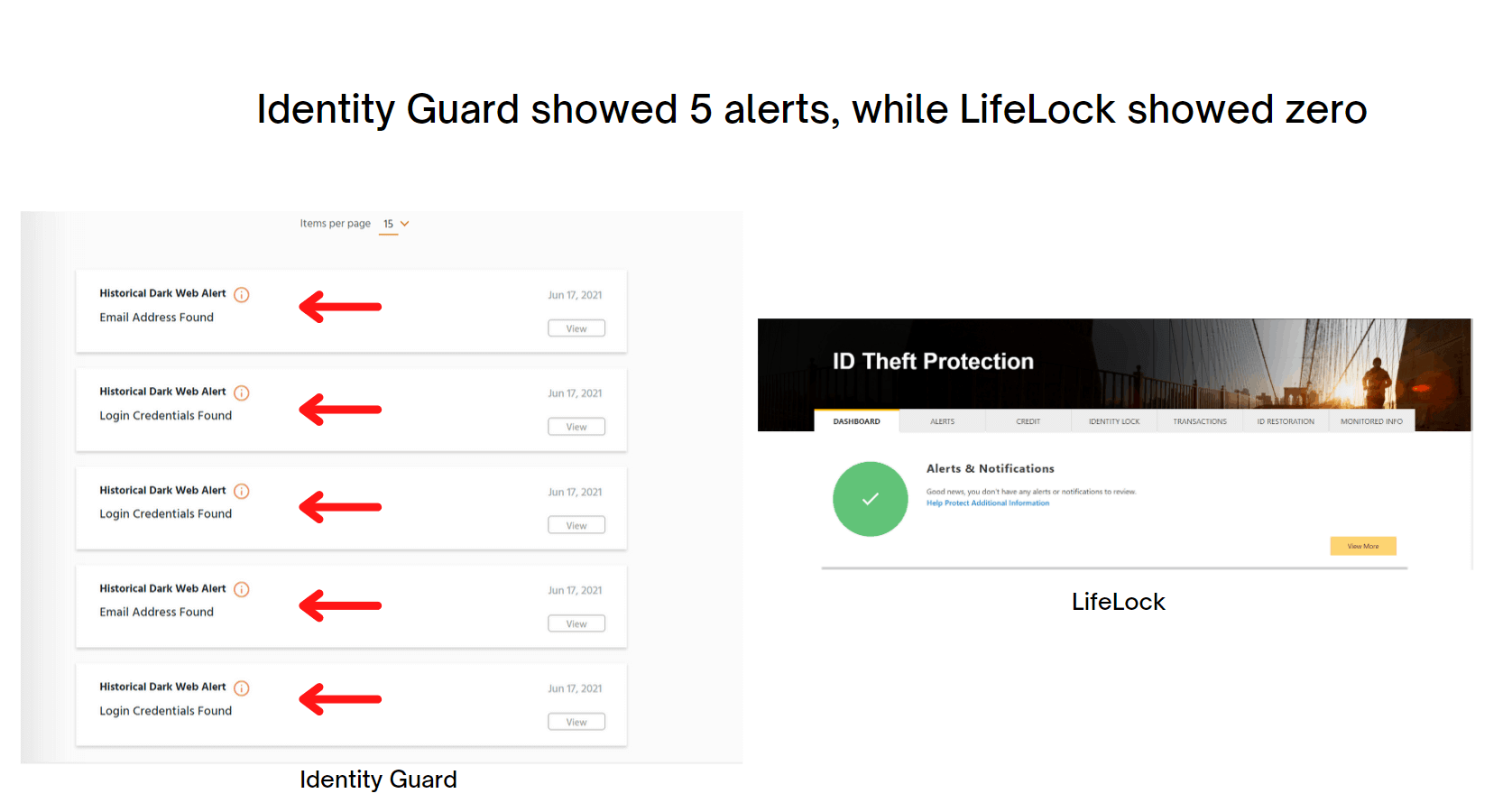
LifeLock eventually surfaced some additional alerts — but the fastest took 48 hours, with an average closer to 3 days. Some took over a week. For identity protection, that delay is unacceptable. If a data breach leaks your bank credentials, you need to know immediately — not a week later.
Alerts Dashboard
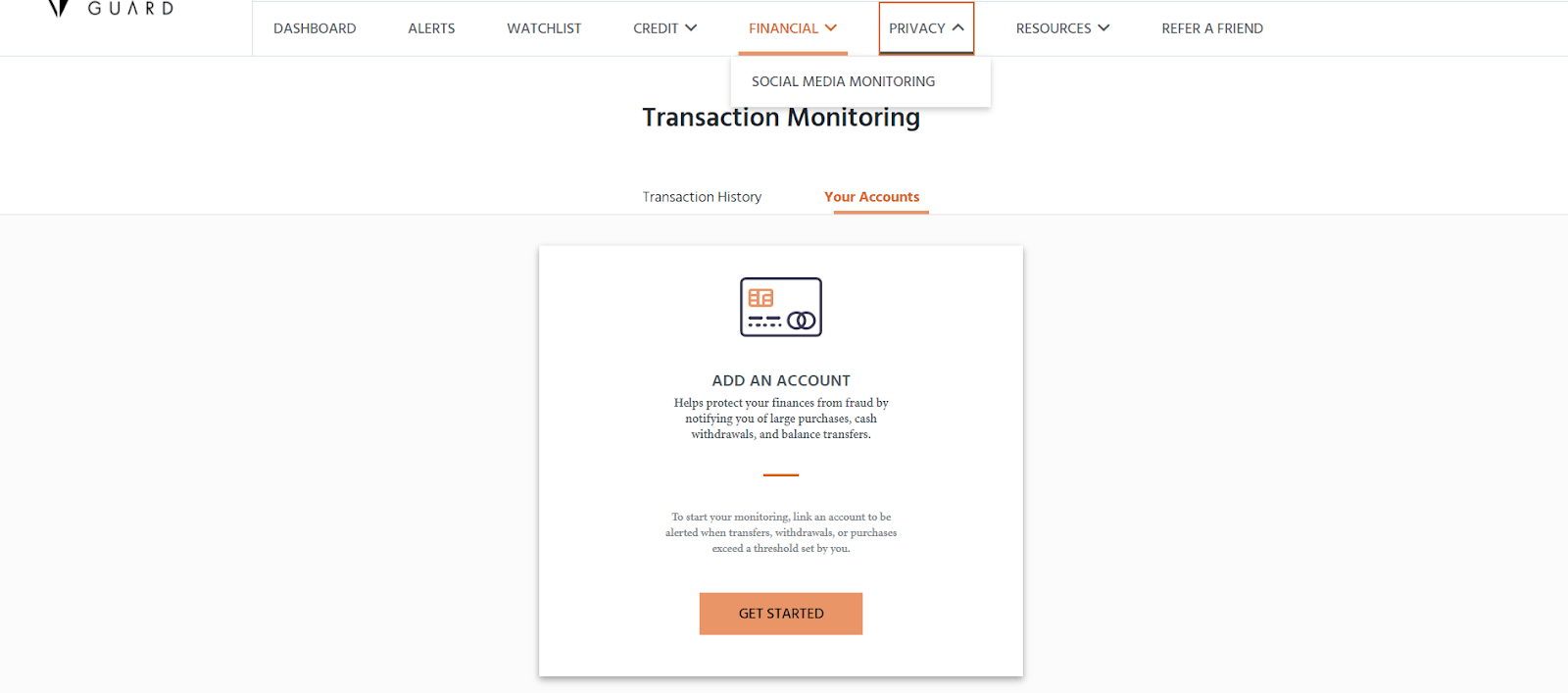
Identity Guard provides a clear Risk Management Score and consolidates alerts into a clean, navigable interface. You get detailed information about each alert — including compromised login credentials when available.
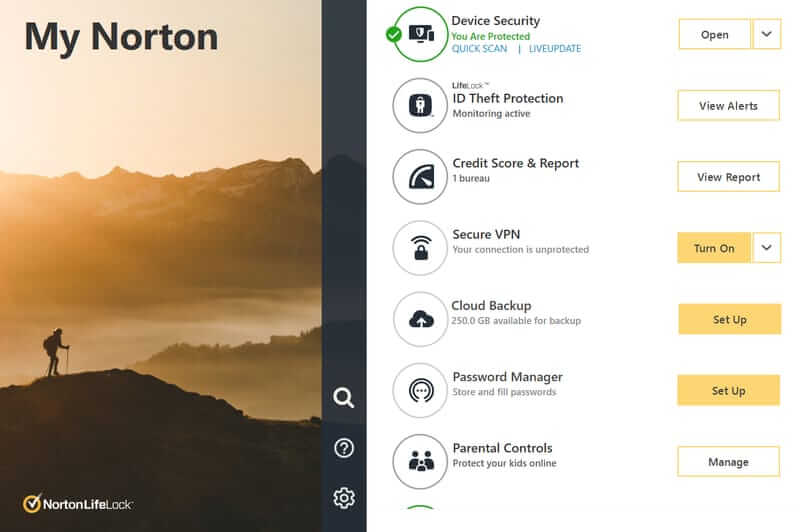
LifeLock’s dashboard is functional but provides less actionable detail per alert.
Credit & Financial Monitoring
Both offer monthly VantageScore credit reports. Identity Guard includes credit lock and credit freeze directly from the dashboard — you can protect your credit immediately without calling the bureaus.
LifeLock offers a uniquely convenient Identity Lock feature — a soft credit lock you can toggle on and off instantly from the app. Unlike a full credit freeze (which requires a process at each bureau), LifeLock’s lock can be switched off for a day when you need to apply for credit, then switched back on. This is genuinely more convenient than Identity Guard’s implementation.
Verdict: Identity Guard wins — 15 alerts vs 1 is not a close competition.
Threat Resolution — Identity Guard’s Team Is Better Trained
Customer Support
We called both services multiple times. The difference was stark.
Identity Guard answered in under one minute. Representatives were courteous, knowledgeable, and answered questions off the top of their heads without needing to look things up. Available Monday–Saturday, 8AM–11PM ET.
LifeLock makes reaching their customer service team unnecessarily difficult — they hide their phone number. When we did get through, representatives needed extra time to verify answers. LifeLock does offer 24/7 availability and a text chat option (useful when you can’t talk on the phone), but the quality gap is noticeable.
Concierge Restoration
Identity Guard’s White Glove Concierge Service (Ultra plan) assigns a dedicated representative whose entire attention focuses on your case. They’ll host three-way calls with your bank or government agencies — having someone in your corner during a crisis makes an enormous difference.
LifeLock does not offer comparable concierge-level service.
Wallet Protection
Both offer wallet protection, but Identity Guard goes further:
- Helps cancel your credit cards
- Automatically reviews your credit report for signs of fraud
- Sends up to $2,000 in emergency cash if needed
LifeLock’s wallet protection covers the basics — card cancellation — but stops there.
Verdict: Identity Guard wins — better-trained agents, deeper concierge service, more comprehensive wallet protection.
Identity Theft Insurance — Identity Guard Scales for Families
Both services include $1 million in identity theft insurance with $0 deductible on all plans. The coverage structure is similar:
| Coverage | Identity Guard | LifeLock |
|---|---|---|
| Aggregate Limit | $1M per adult | $1M total |
| Lost Wages | $2,000/week, 5 weeks | $2,000/week, 5 weeks |
| Travel Expenses | $1,000/period | $2,500/period |
| Deductible | $0 | $0 |
The critical difference: Identity Guard’s insurance is per adult. A family plan covering 5 adults provides $5 million in total coverage. LifeLock caps at $1 million regardless of household size.
Verdict: Identity Guard wins — per-adult scaling gives families significantly more protection.
Family Plans — Identity Guard Is More Generous
Identity Guard offers family plans covering up to 5 adults plus unlimited children at every tier, with clear online pricing. No phone calls required.
LifeLock family plans cover 2 adults plus up to 5 children. The pricing is higher at every tier, and the cost increases significantly at renewal.
| Plan Tier | Identity Guard Family | LifeLock Family |
|---|---|---|
| Entry-level | $8.99/mo (5 adults) | $18.50/mo (2 adults) |
| Mid-tier | $17.99/mo (5 adults) | $30/mo (2 adults) |
| Top-tier | $23.99/mo (5 adults) | $39/mo (2 adults) |
Identity Guard covers more people for less money at every level.
Verdict: Identity Guard wins — 5 adults vs 2, lower prices, no renewal increases.
Ease of Use — Both Are Good, Identity Guard Has the Edge
Both services have clean interfaces and easy signup processes. The difference is in daily use.
Identity Guard shows alerts, credit scores, and account status all from the main dashboard — no clicking through tabs to find what you need.
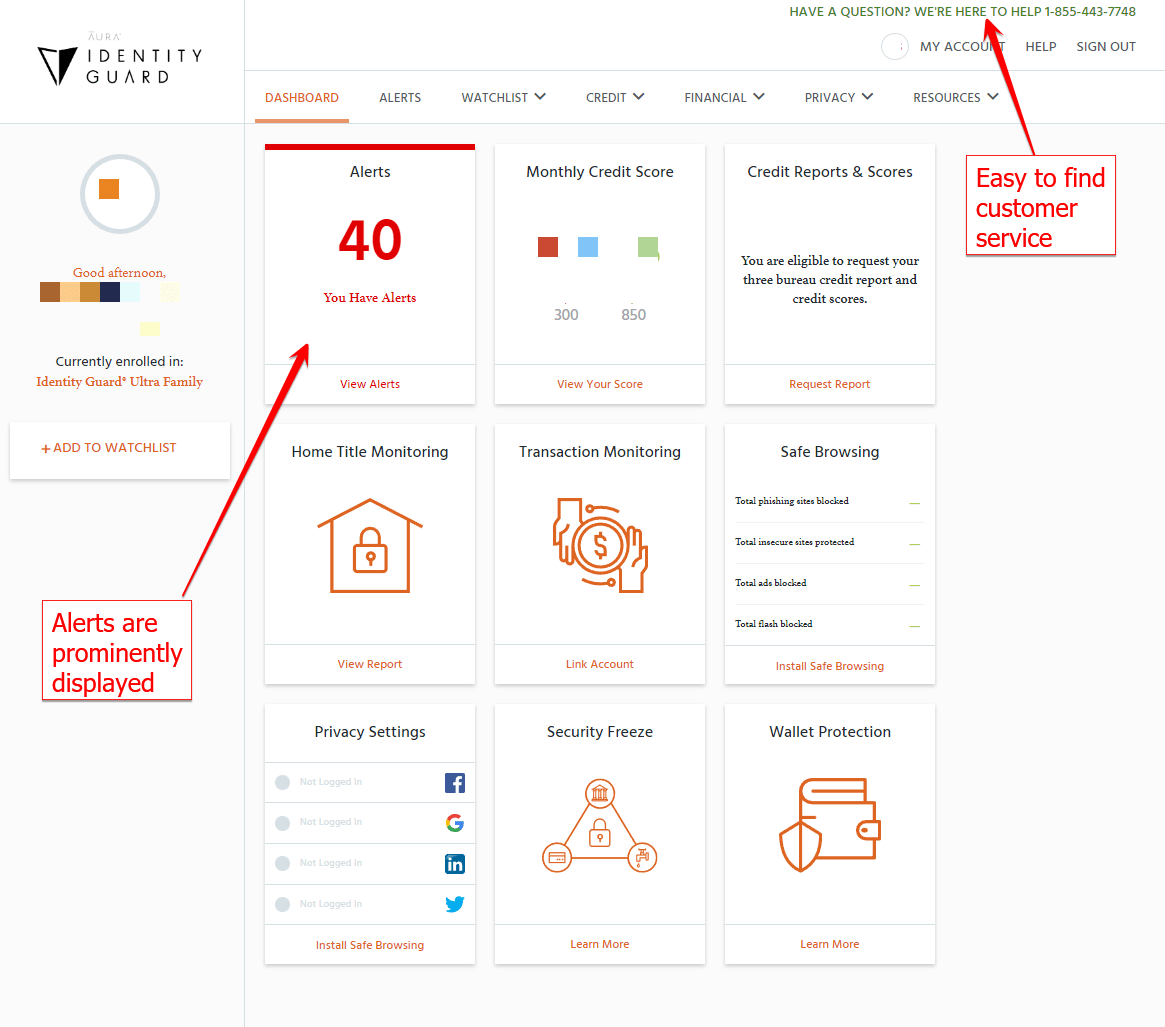
LifeLock has a well-designed app with Norton 360 integration, but the dashboard requires more navigation to access the same information. Each tab loads separately, which can be frustrating on slower connections.
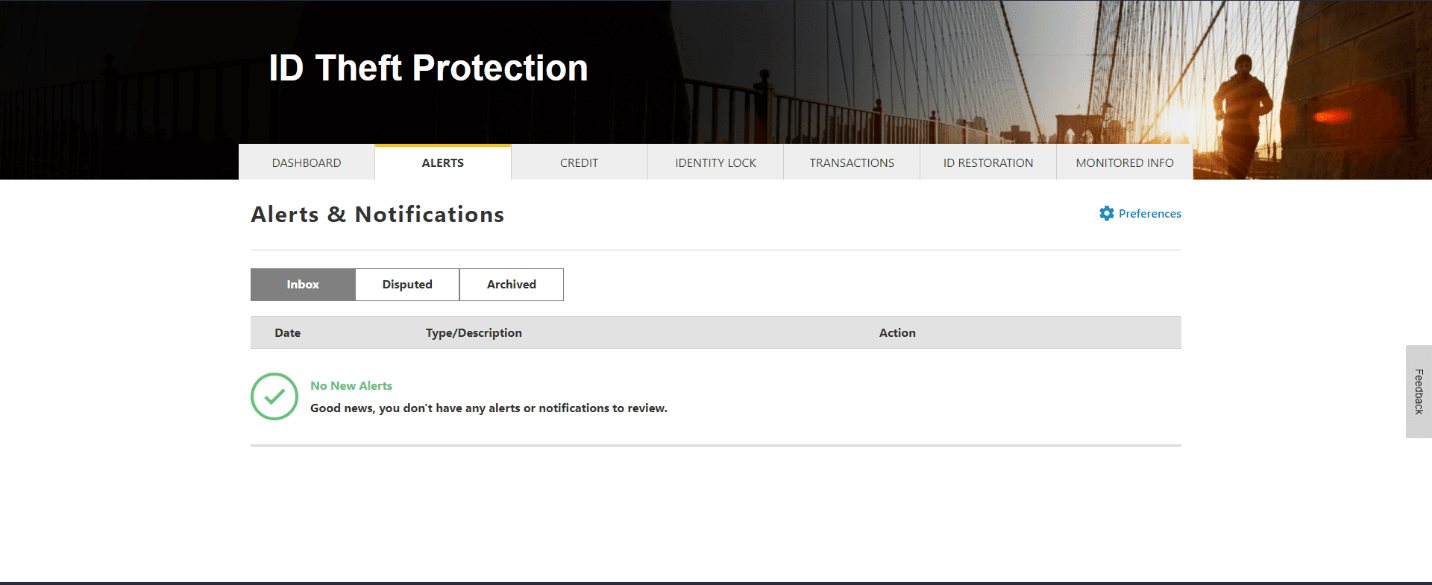
Verdict: Identity Guard wins — more information at a glance, less clicking.
Additional Services — LifeLock’s One Win
This is the one category LifeLock wins clearly.
| Feature | Identity Guard | LifeLock |
|---|---|---|
| Antivirus | ❌ | ✅ Norton 360 |
| VPN | ❌ | ✅ Norton VPN |
| Password Manager | ✅ | ✅ |
| Parental Controls | ❌ | ✅ |
| Cloud Backup | ❌ | ✅ |
LifeLock subscriptions include Norton 360 — antivirus, VPN, password manager, cloud backup, and parental controls. That’s a genuine value add.
Identity Guard includes a password manager but lacks the broader security suite.
That said, many of Norton’s extras are available free elsewhere (AVG for antivirus, Credit Karma for credit scores), and extras don’t compensate for weaker core monitoring.
Verdict: LifeLock wins — Norton 360 bundle is a real advantage.
Pricing — Identity Guard Costs Less and Stays That Way
| Plan | Identity Guard | LifeLock |
|---|---|---|
| Entry-level | $7.50/mo (Value) | $7.50/mo (Standard) |
| Mid-tier | $11.99/mo (Total) | $15/mo (Advantage) |
| Top-tier | $17.99/mo (Ultra) | $20/mo (Ultimate Plus) |
| Family (top-tier) | $23.99/mo (5 adults) | $39/mo (2 adults) |
The introductory prices look close. But LifeLock’s prices increase significantly after the first year — a cost many subscribers don’t anticipate until it hits.
At the family level, the gap is dramatic: Identity Guard’s Ultra family plan covers 5 adults for $23.99/month. LifeLock’s Ultimate Plus family covers 2 adults for $39/month.
Verdict: Identity Guard wins — lower prices, more family coverage, no renewal surprises.
The Elephant in the Room: Aura
Identity Guard wins this comparison decisively. But there’s a service that beats both.
Aura is built by the same parent company as Identity Guard and shares the same dark web monitoring engine — it catches the same 15 alerts. But Aura adds everything both services are missing:
- VPN, antivirus, and password manager — the extras LifeLock wins on, Aura includes too
- Data broker removal — automated opt-outs from hundreds of sites (neither Identity Guard nor LifeLock offers this)
- Parental controls — including Circle for device-level management
- 24/7 U.S.-based support — no hidden phone numbers, no limited hours
- Up to $5M family insurance — $1M per adult on family plans covering 5 adults
- Three-bureau credit monitoring on every plan — no tier upgrades needed
If you’re choosing between Identity Guard and LifeLock, Aura is likely the better answer for most people. It delivers Identity Guard’s monitoring accuracy with LifeLock’s breadth of features — at a competitive price.
Final Verdict: Identity Guard vs LifeLock
Identity Guard takes the top spot based on superior monitoring alone — 15 alerts vs 1 is not a contest. Add in better customer service, more generous family plans, and a cleaner dashboard, and the case is overwhelming.
LifeLock’s only real advantage is the Norton 360 bundle. If antivirus and VPN are your top priority, LifeLock delivers there. But if you’re buying identity theft protection for its core purpose — detecting and resolving threats to your identity — Identity Guard is the clear winner.
And if you want the best of both worlds, get Aura — Identity Guard’s monitoring accuracy plus LifeLock’s breadth of features, all in one subscription.
Related: How Aura compares to LifeLock and Identity Guard | Best Identity Theft Protection Services | Identity Guard Review | LifeLock Review | Aura vs Identity Guard | Identity Guard vs IdentityForce